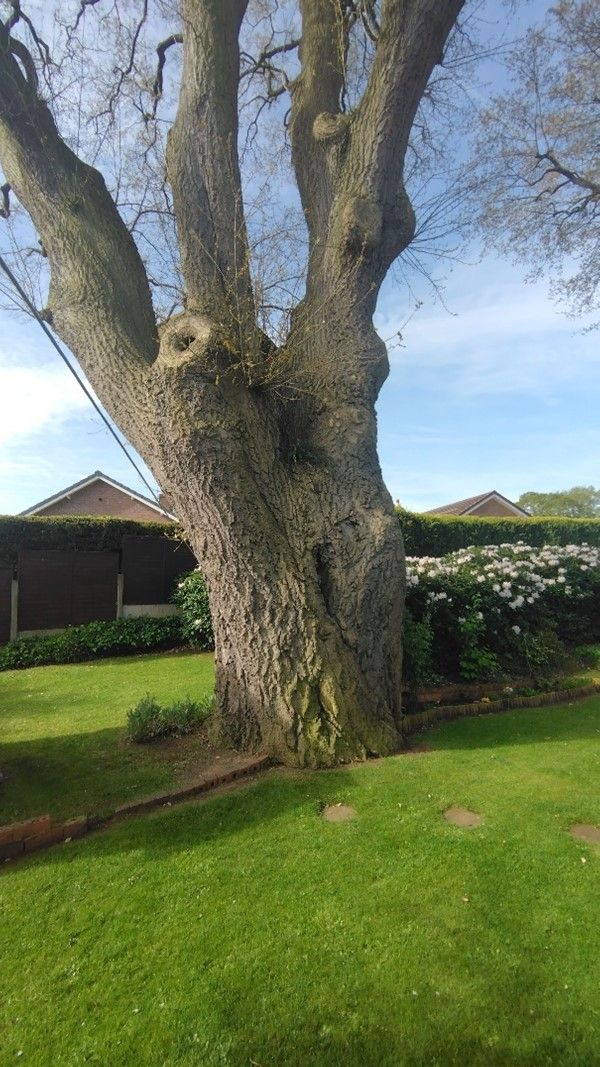
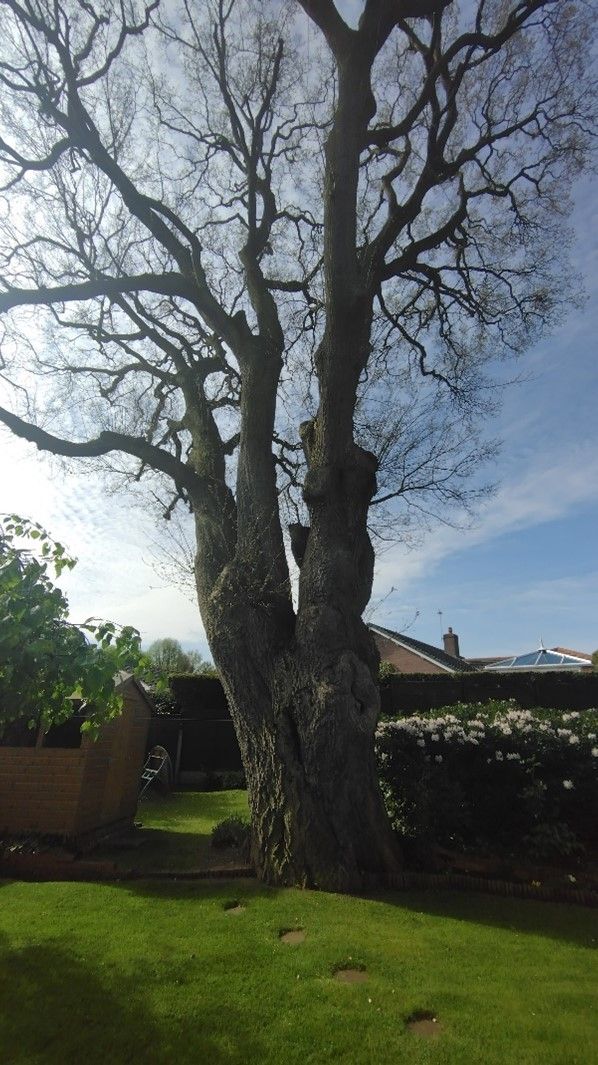
Veteran Tree Survey & Individual Tree Management Plan — Holm Oak, Appleton, Warrington

THE CHALLENGE:


Veteran trees are an irreplaceable component of the British landscape, supporting biodiversity, cultural heritage and ecological continuity in ways that younger trees simply cannot. Their decay features, hollow stems and cavities provide habitat for an enormous diversity of birds, bats and saproxylic invertebrates, and their loss is treated by national planning policy as exceptionally difficult to mitigate. Where a veteran tree stands within a private garden, however, the responsibility for its long-term care often falls to a homeowner with limited specialist guidance — and the pressures of soil compaction, neighbouring development, perceived health and safety risk, and well-intentioned but inappropriate management can all accelerate decline.


A homeowner in Appleton, Warrington, commissioned an arboricultural survey of a mature Holm Oak (Quercus ilex) within their garden at Shepperton Close. The tree forms part of a TPO group designation listed as Evergreen Oak, and is one of four surviving specimens spread across two neighbouring gardens — a rare living remnant of the original Appleton Hall estate. With an estimated age of 200–250 years, an estimated remaining longevity of 100+ years, and a trunk girth in the 421–600 cm range, the oak required a veteran-grade assessment capable of capturing its current condition, its habitat value, and the long-term framework needed to preserve it.


OUR ROLE:


A full veteran tree survey was undertaken on 23 May 2023, recording the tree's species, form, dimensions, vitality and structural condition, alongside a detailed habitat assessment and a review of current threats and management context. The Holm Oak was confirmed as a maiden, upright, alive specimen with live growth occupying more than 50% of the current crown outline and crown loss of less than 25% of its likely peak framework — strong indicators of continued vigour for a tree of this age. Veteran features were documented across the trunk and main framework, including two trunk cavities, holes greater than 5 cm in main branches, tears, scars and minor wounds, and brown rot detected within the stem. No white rot, wood mould or significant deadwood was recorded.


The habitat assessment classified the tree as having moderate ecological quality, with decay pockets, hollow branches and cavities providing nesting potential for multiple bird species and bats, and the likelihood of supporting a substantial diversity of invertebrates. Bat roost potential and bird nesting evidence in cavities were recorded on site, with ferns present as epiphytic flora. Three current threats were identified and rated High overall — soil compaction from repeated mechanical mowing across the rooting zone, the risk of root protection area incursion from neighbouring construction activity, and the ongoing health and safety pressure that accompanies a large garden tree.


A 30-year Individual Tree Management Plan was produced, tailored to the species and to this specimen's particular form, history and setting. The ITMP framework follows national best practice for veteran tree stewardship, beginning with the vitality and mechanical condition assessment completed at this survey, identifying the works needed both to the tree and to its surroundings to maintain its current state, and specifying the timing of each intervention with explicit allowance for adjustment in response to monitoring. Seven prioritised management recommendations were issued: maintain current size and form; improve soil condition within the rooting zone; apply mulch and biochar to encourage adventitious root development; reinspect every three years; escalate to advanced assessment using vitality testing or decay detection equipment if condition deteriorates; protect the soil environment during any neighbouring development by avoiding level changes, construction traffic and material storage within the root protection area; and provide arboricultural monitoring and supervision during any works in proximity to the tree.


THE OUTCOME:


The homeowner received a defensible, veteran-grade record of their tree's condition, a clear understanding of its ecological and heritage significance, and a structured 30-year management framework written specifically for this Holm Oak. The ITMP provides a renewable foundation for ongoing care — at the end of the plan period, if the tree remains alive and in need of management, a new ITMP can be drawn up.


The seven management recommendations give the homeowner a practical, prioritised programme of intervention and monitoring, and the survey provides an evidential basis for engagement with the local planning authority should neighbouring development pressures arise. The work demonstrates the value of properly written ITMPs in safeguarding privately owned veteran trees, and the role of specialist veteran tree assessment in preserving the small number of surviving estate trees that continue to anchor the historic landscape of Appleton.
Specialist Tree Assessments for Veteran & Ancient Trees in Greater Manchester, Lancashire & Cheshire

Get in contact with our highly experienced and personable team of arboriculturists today, to discuss your requirements and to obtain your zero obligation quotation.